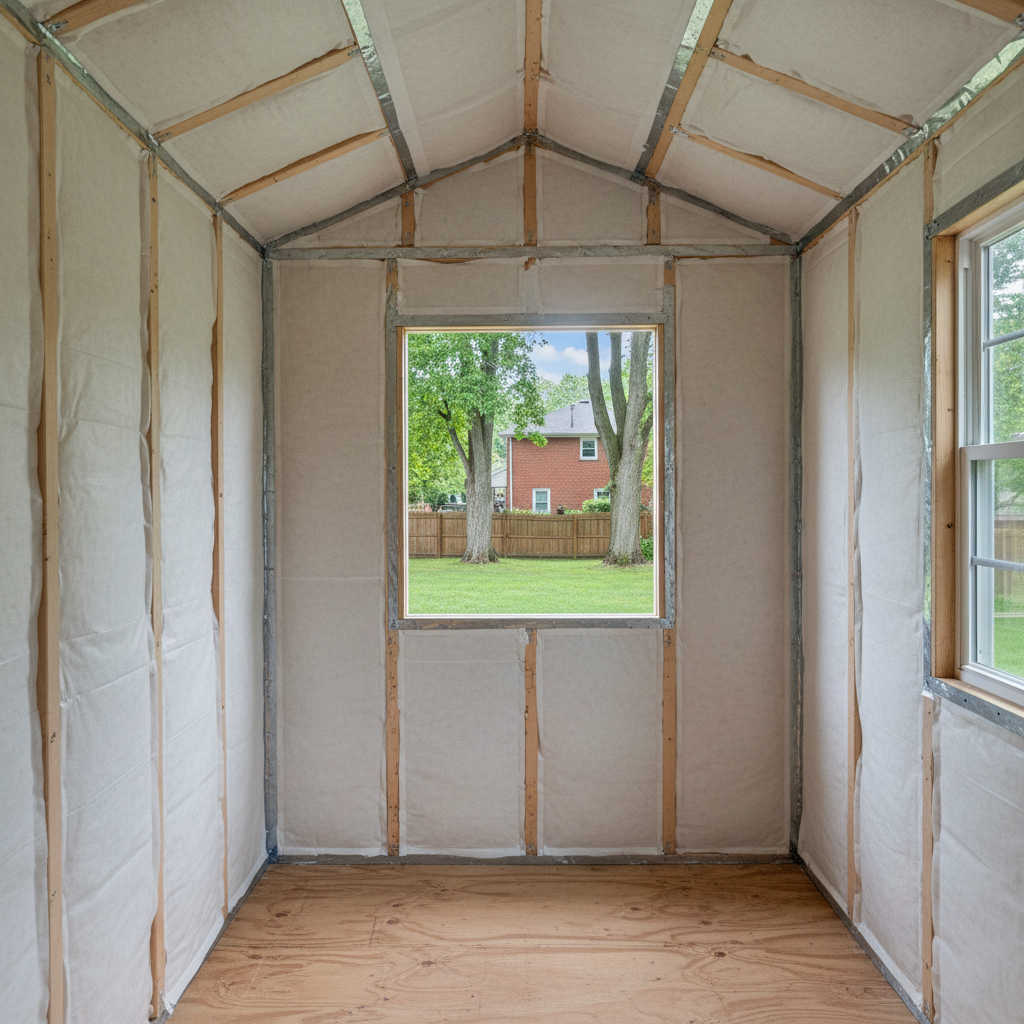
Alright, let's talk sheds. Maybe you've got one for storage, a workshop, or even a little backyard office. And if you're in Philly, you know our weather can be brutal – those sweltering summers and damp, freezing winters are no joke. So, insulating that shed? Smart move, absolutely. But I've seen folks make some real head-scratching mistakes when they're planning or hiring for this kind of project. Let's make sure you don't join 'em.
Mistake #1: Treating Your Shed Like a House (or a Cardboard Box)
This is a big one, truly. Some folks think, "Hey, insulation is insulation, right?" and they just grab whatever's cheapest or easiest. Or, on the flip side, they over-engineer it like it's a full-blown house. A shed isn't your main residence, but it's not a disposable item either. You need the right balance, that's all.
For example, you probably don't need R-49 in the ceiling of a storage shed. But you definitely don't want bare walls letting in all that humidity either. The goal is often temperature stabilization and moisture control, not necessarily achieving living-space comfort levels. Think about what you're storing or doing in there. If it's just lawnmowers, your needs will be different than if it's woodworking tools or a spot for your plants to overwinter, right?
Mistake #2: Ignoring the Foundation and Floor
Everyone focuses on walls and ceilings, and that's good. But they often forget the floor. Especially here in Philadelphia, with our clay-heavy soil and damp conditions, moisture can wick right up through an uninsulated or poorly sealed shed floor. You'll get condensation, rust on your tools, and maybe even mold. Nobody wants that.
If your shed is on skids or a concrete slab, you've got options. For concrete, a vapor barrier and rigid foam board underneath can make a huge difference. If it's off the ground, insulating between the joists with rigid foam or even closed-cell spray foam can stop cold air and moisture from creeping up. Don't skip this step; it's foundational (pun intended, I couldn't resist).
Mistake #3: Forgetting About Ventilation
Insulation without proper ventilation is just asking for trouble. You'll trap moisture, leading to rot and mold, especially during our humid summers. Even with a great vapor barrier, some moisture will always find its way in, and you need a way for it to get out.
Think about things like gable vents, ridge vents, or even a small solar-powered fan. The goal is to create airflow, especially in the attic space of your shed, to prevent heat and moisture buildup. It's a critical partner to insulation, not an afterthought.
Mistake #4: DIYing Spray Foam Without Experience
Look, I'm all for DIY where it makes sense. But spray foam insulation? That's not typically a beginner's project, especially if you're going for closed-cell. It's a chemical process, and if you don't get the mix right, you'll end up with a sticky, ineffective mess that's a nightmare to remove. Plus, you need proper safety gear – respirators, gloves, eye protection. The fumes are no joke.
I've seen folks try to save a buck with those DIY kits and end up spending way more to have a professional clean up their mistakes. If you're considering spray foam for your shed, especially if you want the superior moisture barrier and R-value that closed-cell offers, it's usually best to call in the pros. We at Spray Foam Pros of Philadelphia do this every day, and we've got the equipment and expertise to do it right, safely, and efficiently.
Mistake #5: Not Getting Specific Quotes
Don't just ask for "shed insulation." Be clear about what you want insulated (walls, ceiling, floor), what you'll be using the shed for, and any specific concerns you have (like moisture control). A good contractor will ask you these questions anyway, but being prepared helps you compare apples to apples.
Also, make sure the quote includes everything: materials, labor, cleanup, and any necessary prep work. You don't want surprise charges popping up halfway through the job. Get it in writing, always.
Mistake #6: Ignoring Pest Control
Before you seal up those walls with insulation, make sure you've addressed any pest issues. Rodents, insects – they love cozy, insulated spaces. If you trap them in there, you're just creating a bigger problem down the road. Seal up any entry points, set traps if needed, and make sure your shed is critter-free before you insulate. It's a simple step that can save you a lot of grief.
Insulating your shed is a smart investment, especially with our Philly weather. Just make sure you're doing it right, avoiding these common blunders, and you'll have a much more functional and comfortable space for years to come.