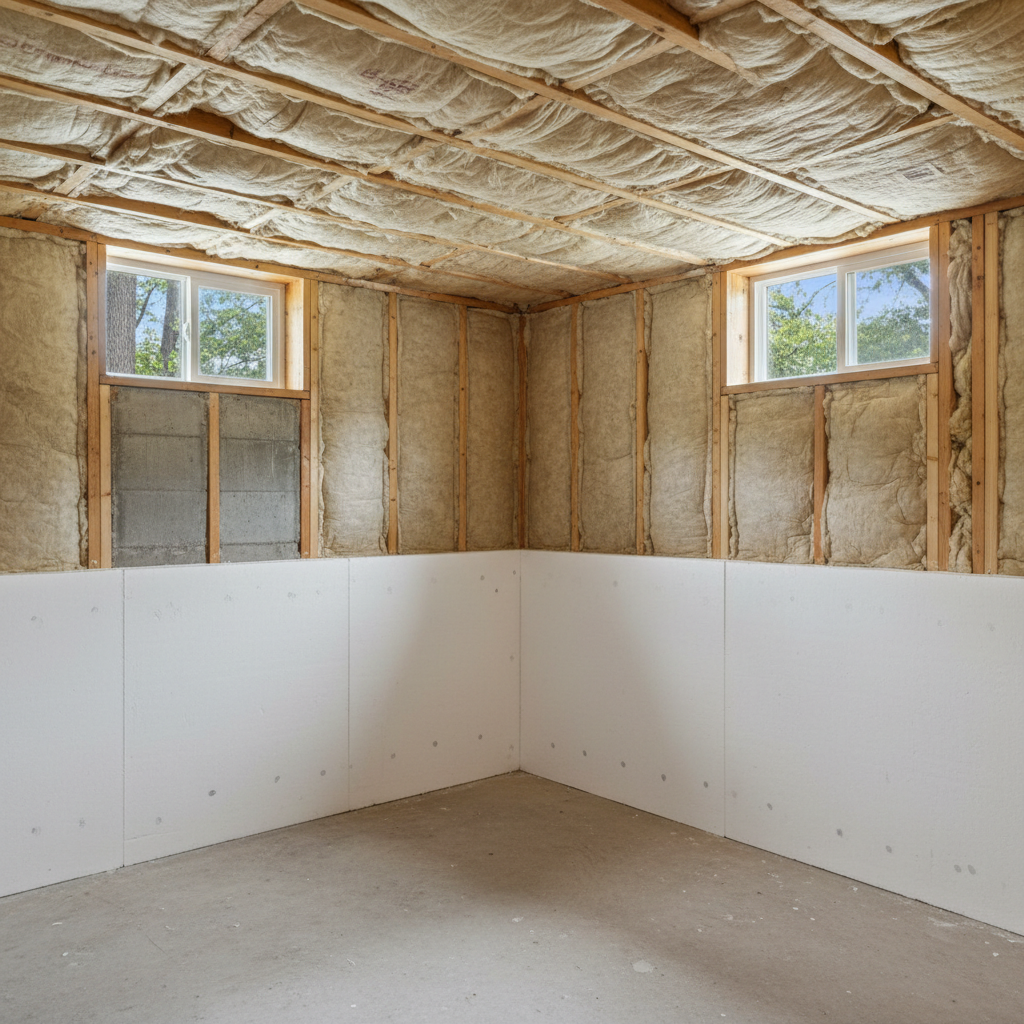
Alright, let us talk about basements. Down here in Philadelphia, from the old rowhomes in Fishtown to the twins out in Roxborough, our basements are often the unsung heroes of our homes. They are storage, laundry, and maybe even a finished living space. But when it comes to insulating them, we have seen homeowners make some real head-scratchers. A mistake in the basement can lead to a lot of regret and expense down the line.
Ignoring Moisture Issues First
This is probably the biggest and most important mistake we see. You cannot just slap insulation over a damp problem and expect it to go away. Our Philadelphia basements, especially the older stone foundations, are prone to moisture. We get humid summers as well as damp, chilly winters. This means basements are constantly battling temperature swings as well as humidity. If you have musty smells, peeling paint, or even just small puddles, you have a moisture problem. You have to fix that before you even think about basement insulation in Philadelphia. That means addressing foundation cracks as well as poor drainage. You might also need to install a waterproofing system like a French drain or a sump pump. Insulation will not stop water. It will just trap it, leading to mold, mildew, and ruined materials.
Choosing the Wrong Type of Insulation
Not all insulation is created equal, especially for basements. We see folks trying to use fiberglass batts in damp basements. This is a recipe for disaster. Fiberglass soaks up water like a sponge. It loses its R-value when wet. It also becomes a prime breeding ground for mold. You want materials that are moisture-resistant and will not support mold growth. Closed-cell spray foam or rigid foam boards are usually your best bet for basement insulation in Philadelphia. Closed-cell spray foam, for example, acts as both an air barrier as well as a vapor barrier. This is important for moisture control in our climate. It is a denser, more rigid barrier that really seals things up tight.
Forgetting About Air Sealing
Insulation and air sealing go hand-in-hand for basement insulation in Philadelphia. You can have the highest R-value insulation in the world. However, if air is still leaking in and out, you are wasting energy and inviting moisture. Think about those rim joists. This is the area where your foundation meets your house frame. They are notorious for air leaks. Sealing up all those cracks and gaps around studs, pipes, and wiring is important. Spray foam is fantastic for this because it expands to fill all those nooks and crannies. This creates a continuous air barrier for your Philadelphia basement.
Not Using Pressure-Treated Lumber Against Concrete
This is a small detail that can lead to big headaches. Concrete naturally absorbs and holds moisture. If you frame out walls in your basement and put untreated wood directly against that concrete, that wood is going to wick up moisture. It will warp. It will eventually rot. Always use pressure-treated lumber for any wood that is going to be in direct contact with concrete. This is a simple step that prevents a lot of structural issues down the road for your basement insulation project.
Ignoring Local Building Codes and Permits
We know permits can be a pain. However, skipping them for a basement insulation project in Philadelphia is just asking for trouble. The city has specific building codes that cover things like minimum R-values. They also cover egress windows if you are finishing a living space. Ceiling heights and proper ventilation are also covered. Failing to get the right permits can lead to fines. You might also have to tear out work. It can even create safety hazards. A good contractor, like us at Spray Foam Pros of Philadelphia, knows these codes inside and out. We will make sure your basement insulation project is compliant.
Hiring the Cheapest Bid Without Doing Your Homework
We understand everyone wants to save a buck. But when it comes to something as important as basement insulation, going with the absolute lowest bid is a huge gamble. You should check references as well as understand what you are getting. You might end up with an inexperienced contractor who makes all the mistakes we just talked about. They might use the wrong materials. They might cut corners on air sealing. They might also ignore moisture issues. Then you are paying twice to fix their mess. Ask for detailed proposals. Check their licenses. Look at their past work. A reputable company will be transparent and happy to answer all your questions about basement insulation in Philadelphia.
Not Considering Long-Term Ventilation
When you insulate and air seal a basement properly, you are making it much tighter. That is great for energy efficiency. But it also means you need to think about ventilation. Without proper airflow, you can still end up with moisture buildup as well as stale air. This can happen even with the right basement insulation. Sometimes, a good dehumidifier is enough. In other cases, you might need to consider mechanical ventilation. This will ensure healthy air quality and prevent moisture issues. It is all part of creating a truly comfortable and healthy basement environment in Philadelphia.
So, there you have it. Do not let these common blunders turn your basement insulation project into a nightmare. Do your homework. Address moisture first. Choose the right materials. Hire pros who know what they are doing. Your comfortable, dry, and energy-efficient Philly basement will thank you for it.