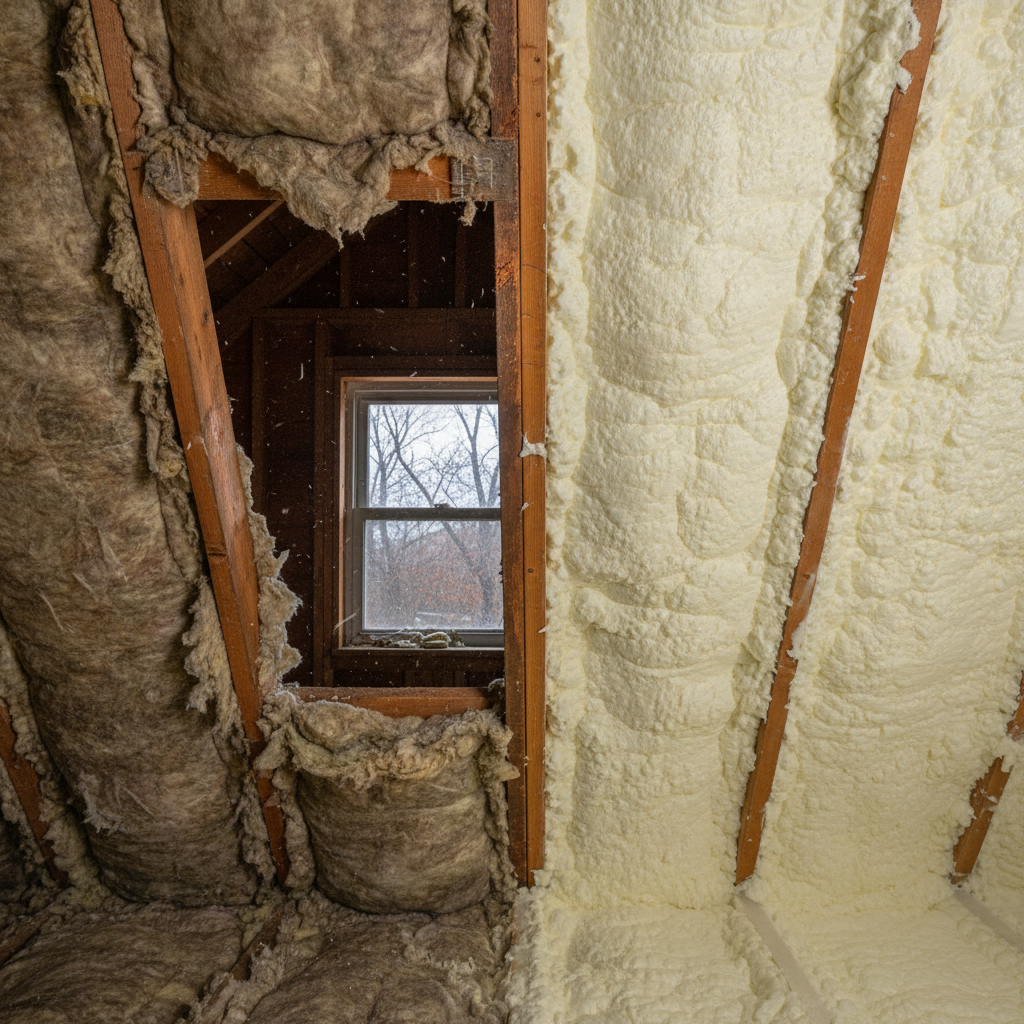
Alright, Philly homeowners, let us talk about open cell spray foam. You have probably heard it is a good way to seal up your home. This also cuts down on drafts as well as saves money on those energy bills. You would be right about that. But when it comes to open cell spray foam, it is not just one thing. There are a couple of ways we typically approach open cell spray foam in Philadelphia. Knowing the difference can save you headaches as well as money down the line. This is especially true with our city's wild weather.
We are talking about using standard open cell spray foam versus open cell spray foam paired with a separate vapor retarder. This is an important distinction. It is particularly important in a place like Philadelphia where we get those hot, humid summers as well as damp, chilly winters.
What is Standard Open Cell Spray Foam All About?
First off, let us nail down what open cell spray foam is. It is a lighter, softer, and more flexible insulation material. When our team sprays open cell spray foam, it expands a lot. It fills every nook as well as every cranny. That is why open cell spray foam is so good at creating an airtight seal. This airtight seal is the real magic for cutting down on air leakage as well as making your Philadelphia home more comfortable.
- Cost: Generally, standard open cell spray foam is the more budget-friendly spray foam option. You are looking at somewhere in the ballpark of $0.45 to $0.75 per board foot. This is about $1.50 to $2.60 per square foot for a typical wall in Philadelphia. Standard open cell spray foam is less dense than closed cell spray foam. This means the material cost is lower.
- Durability: Once it cures, open cell spray foam is pretty durable. It will not settle or sag over time like some other insulation types. In addition, open cell spray foam is flexible. It moves with your home's framing as it expands as well as contracts with temperature changes. This is a big deal for older Philly rowhomes.
- Maintenance: Not much maintenance is needed once open cell spray foam is installed. The main thing is protecting it from moisture. We will get to that point.
- Appearance: Open cell spray foam has a soft, spongy, irregular texture. Usually, it is trimmed flush with the studs before drywall goes up. So, you will not see it anyway.
- Sound Dampening: This is where open cell spray foam really shines. Its porous structure is fantastic at absorbing sound. This makes your home in Philadelphia quieter. Think about insulating between floors or interior walls to cut down on noise.
Open Cell with a Vapor Retarder: The Added Layer of Protection
Now, here is the important part for us in Philadelphia. Standard open cell spray foam is vapor-permeable. This means it allows moisture vapor to pass through it. In some applications, like an attic that is vented properly, this is fine. It can even be an advantage. But in other areas, especially in our Philadelphia climate, that permeability can be a problem.
Philadelphia's average humidity hovers around 67% year-round. It can get pretty high in the summer months. If moisture gets into your wall cavities and cannot escape, you are setting yourself up for potential issues. These issues include mold as well as mildew. That is why, in certain situations, Spray Foam Pros of Philadelphia recommends pairing open cell spray foam with a separate vapor retarder.
A vapor retarder is sometimes called a vapor barrier. However, it is important to note that a vapor barrier is different.A vapor retarder is sometimes called a vapor barrier, though they are not exactly the same thing. A vapor retarder is a material that slows down the movement of moisture vapor. This helps to protect your home's structure from moisture damage. Philadelphia's average humidity is around 67% year-round. It can get pretty high in the summer. If moisture gets into your wall cavities and cannot escape, you are setting yourself up for potential issues. These issues include mold as well as mildew. That is why, in certain situations, Spray Foam Pros of Philadelphia recommends pairing open cell spray foam with a separate vapor retarder.