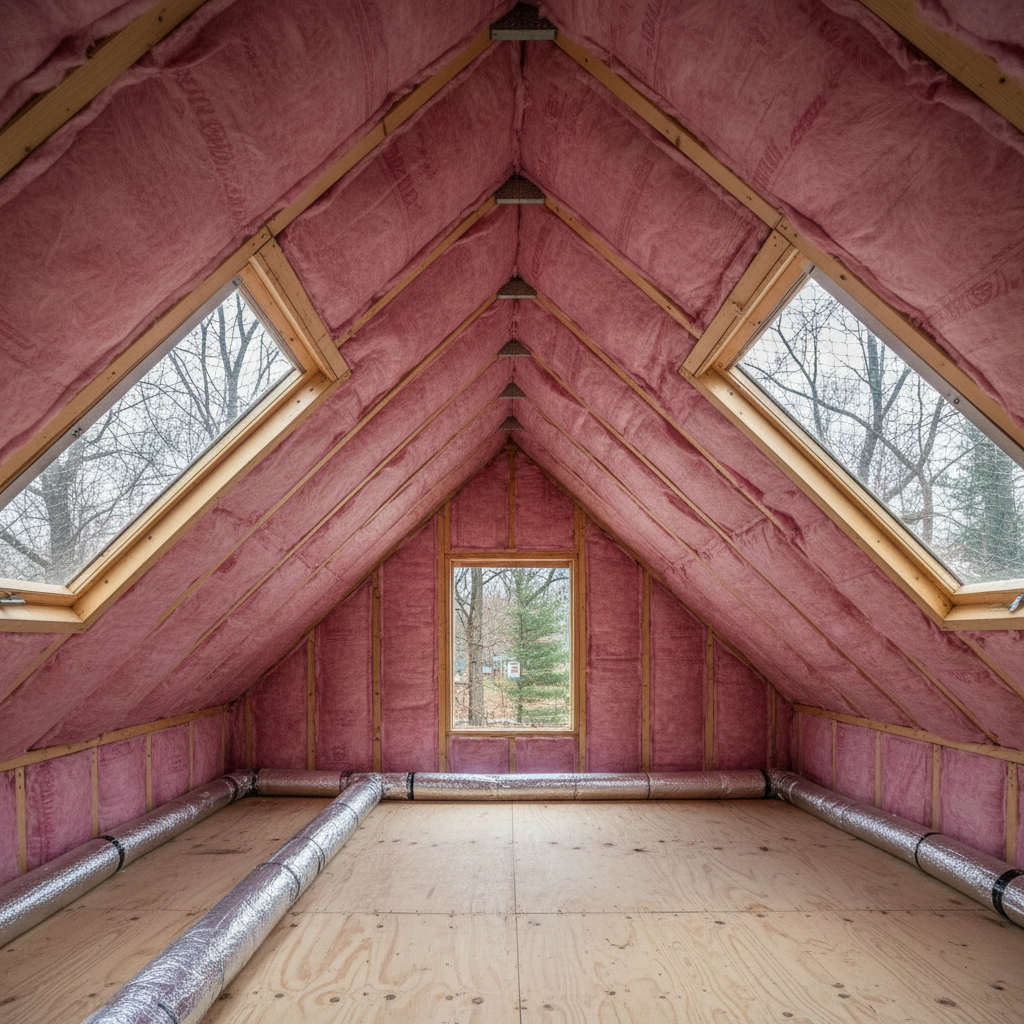
Alright, let's talk batt insulation costs. You're probably here because you're trying to figure out what it's going to set you back to get your home properly insulated, and you're tired of vague answers. I get it. As someone who's been doing this in Philadelphia for years, I've seen it all, and I'm going to give you the straight scoop.
What Makes Batt Insulation Prices Go Up or Down?
It's not just one thing, that's for sure. A few key factors really drive the cost:
- The Type of Batt: Fiberglass is your most common and generally cheapest option. Mineral wool (rock wool) costs a bit more but offers better fire resistance and sound dampening. Cotton or denim batts are eco-friendlier but usually the priciest. For a standard R-19 fiberglass batt, you're looking at maybe $0.50-$1.00 per square foot for materials alone. Mineral wool might be $1.50-$2.50 per square foot.
- R-Value: This is the insulation's thermal resistance. Higher R-value means thicker batts and better performance, which naturally costs more. An R-13 for a 2x4 wall is cheaper than an R-38 for an attic. You'll often see R-13, R-19, R-30, and R-38 as common options.
- Accessibility: This is a big one. Is it an open attic where I can just walk around and lay it down? Or am I crawling through a tight, dusty crawl space under an old rowhome in South Philly, trying to squeeze batts between joists? The harder it is to get to, the more labor time, and that means more money.
- Prep Work & Removal: If you've got old, moldy, or pest-infested insulation that needs to come out first, that's an extra cost. Removing old insulation can run anywhere from $1.00 to $2.50 per square foot, depending on how nasty it is and how much there is.
- Square Footage: Simple math here. More area to insulate, more materials and labor needed.
- Local Labor Rates: Philly's labor costs are generally higher than, say, rural Pennsylvania. Our crews are skilled, insured, and know how to deal with the unique challenges of older Philadelphia homes.
Typical Cost Ranges for Batt Insulation Installation in Philadelphia
Okay, let's get to some numbers. Keep in mind these are averages, and your specific project might be higher or lower.
- Attic (Open, Easy Access): For a typical 1,000 sq ft attic, bringing it up to R-38 with fiberglass batts (including basic labor), you might expect to pay between $2,500 and $4,500. This assumes no old insulation removal.
- Walls (New Construction/Open Cavity): If we're talking about new construction or a renovation where the drywall is off, installing R-13 or R-19 fiberglass batts in 1,000 sq ft of wall space could be $1,500 to $3,000. It's much easier to install when everything's open.
- Walls (Retrofit/Blown-in over Batts): This is trickier for batts. If you're trying to add insulation to existing closed walls, batt insulation isn't usually the best or most cost-effective option. You'd typically look at dense-pack cellulose or spray foam. If someone quotes you for batts in existing closed walls, be very skeptical.
- Crawl Space/Basement Rim Joists: Insulating 50-100 linear feet of rim joists with R-19 or R-30 batts could be $500 to $1,500, depending on access and any moisture issues.
Overall, for a full home project, you're usually looking at a total cost somewhere between $0.80 to $3.00 per square foot for materials and installation. If old insulation needs removal, add another $1.00 to $2.50 per square foot on top of that.
What Should a Quote Include?
When Spray Foam Pros of Philadelphia gives you a quote, or any reputable company, you should see a clear breakdown:
- Material Costs: Specific R-value and type of batt insulation.
- Labor Costs: How many hours or a flat rate for installation.
- Prep Work: Any necessary cleaning, sealing, or removal of old insulation.
- Disposal Fees: For old insulation and debris.
- Permits: If required (less common for just batt insulation, but good to check).
- Warranty Information: On materials and workmanship.
Don't just accept a single number. Ask questions if something isn't clear.
How to Avoid Overpaying
It's simple, but people often skip these steps:
- Get Multiple Quotes: Don't just go with the first guy. Get at least three detailed quotes from different contractors. This helps you compare apples to apples.
- Check References & Reviews: See what other homeowners in Philadelphia are saying about them. Were they on time? Did they clean up?
- Understand the R-Value: Make sure you're getting the right R-value for your area of the house. Don't pay for R-38 in a wall cavity that can only fit R-13.
- Ask About Experience: Especially with older homes. Insulating a new build is different from insulating a 100-year-old brick rowhouse with uneven joists and tight spaces.
- Don't Rush: Take your time to review the quote and ask questions. A good contractor won't pressure you.
Getting batt insulation is a solid investment in your home's comfort and energy bills. Just make sure you're getting a fair price for quality work. If you've got more questions, give us a call at Spray Foam Pros of Philadelphia. We're always happy to talk shop.